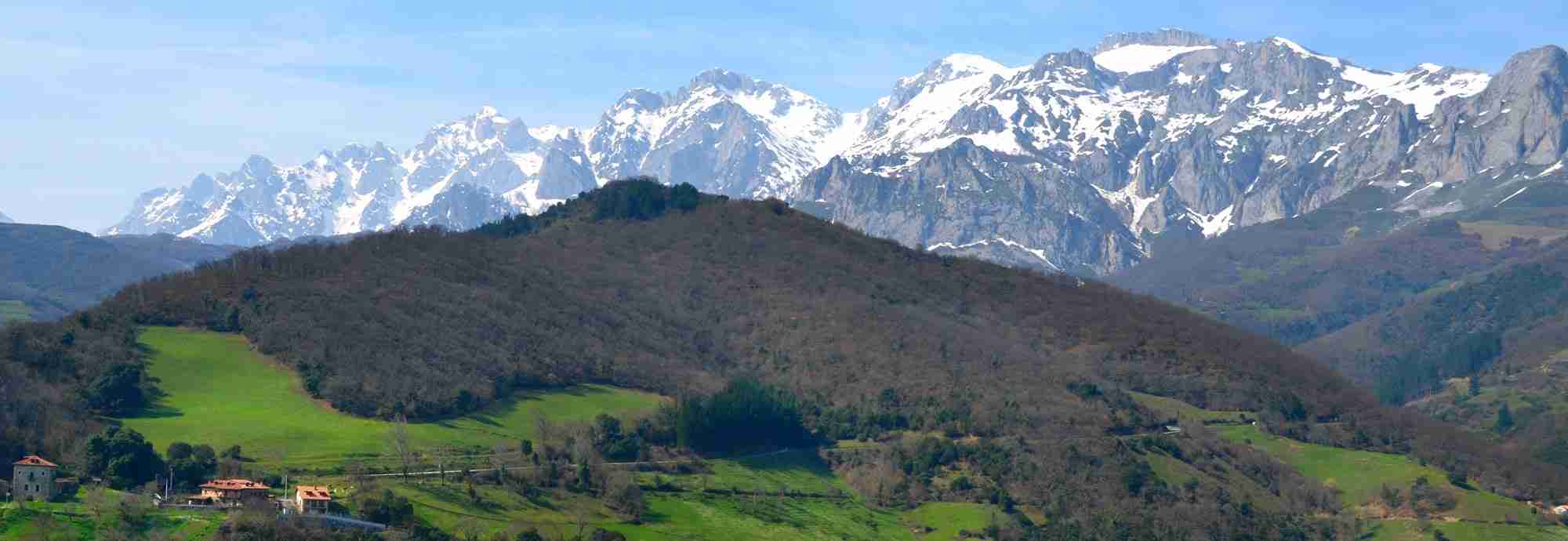
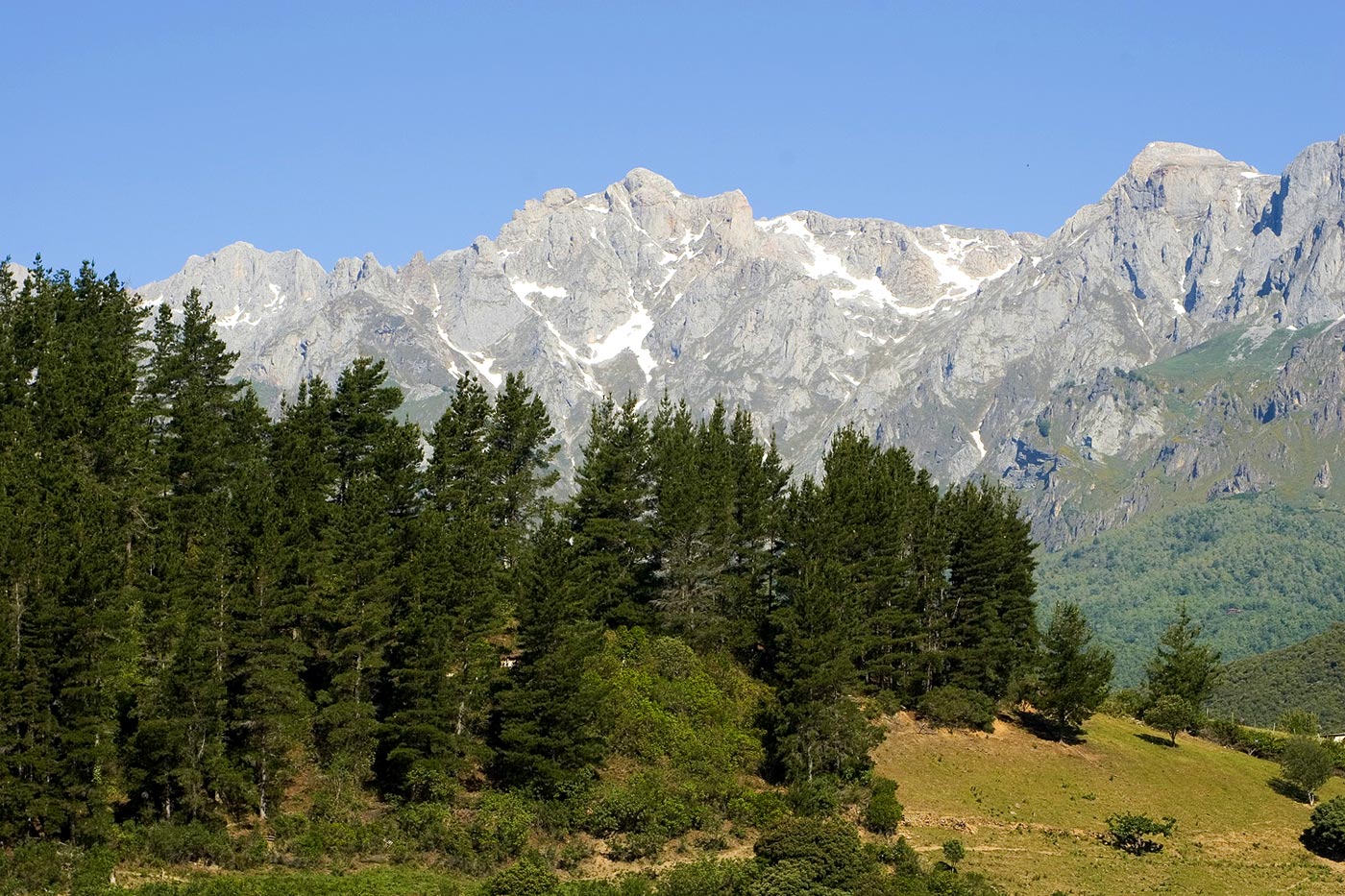
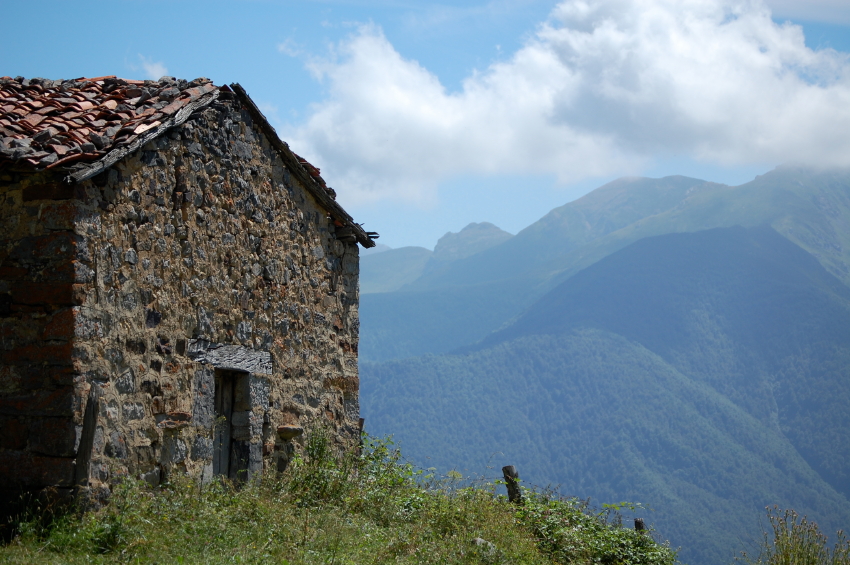
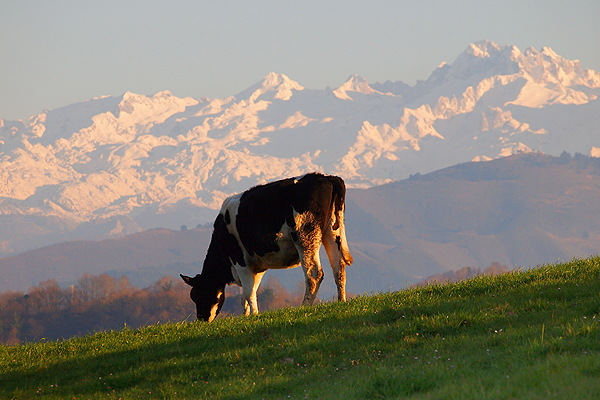
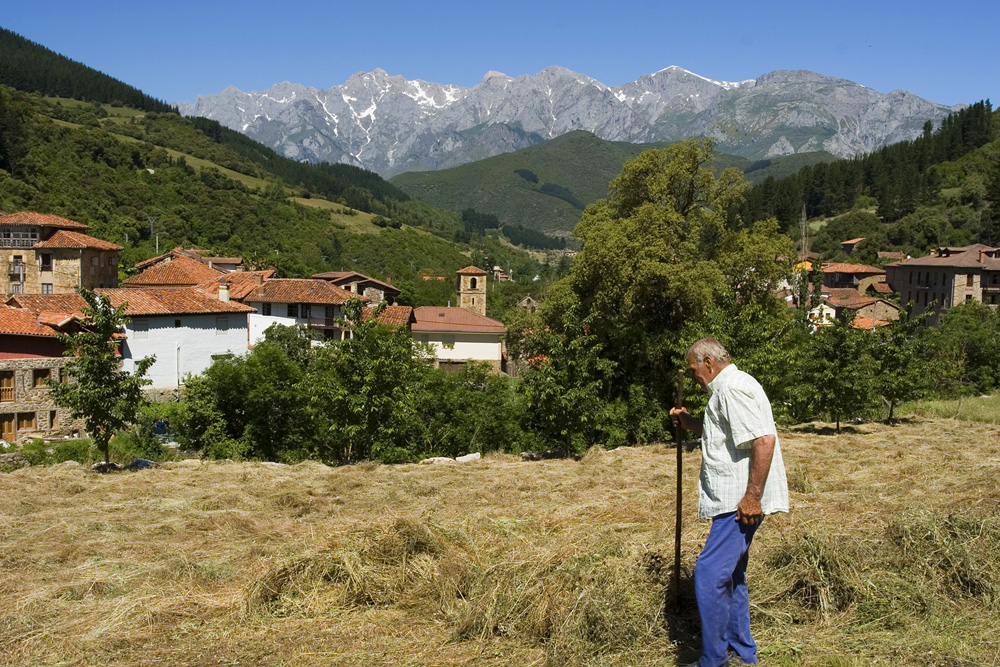
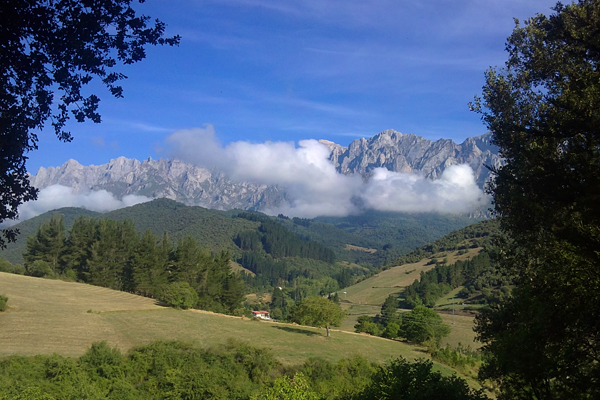
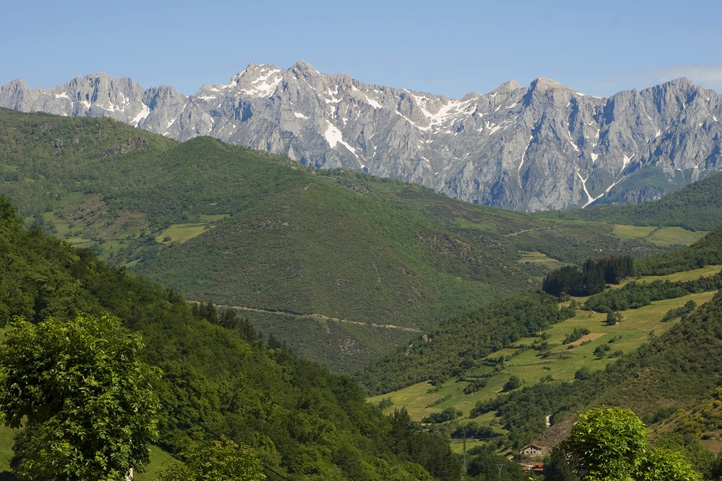
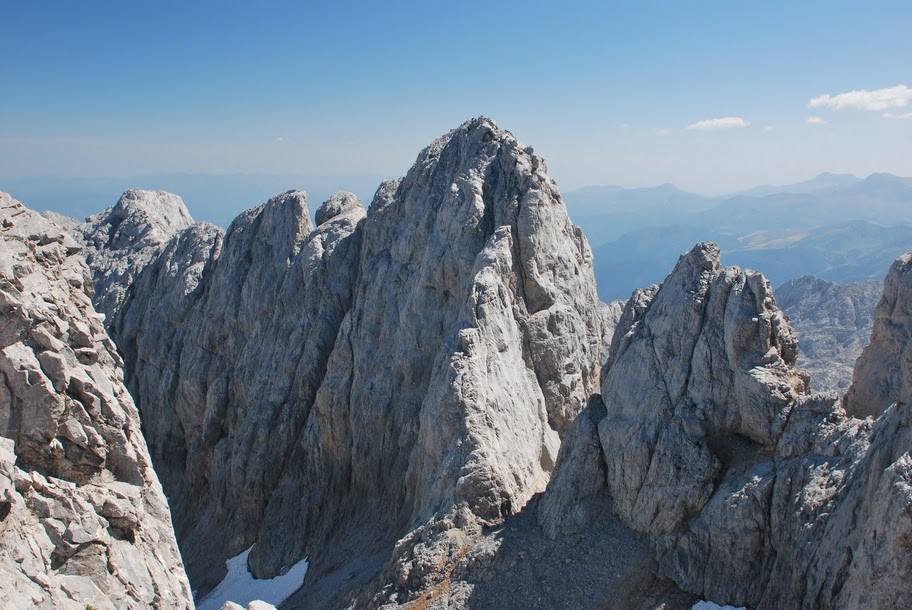
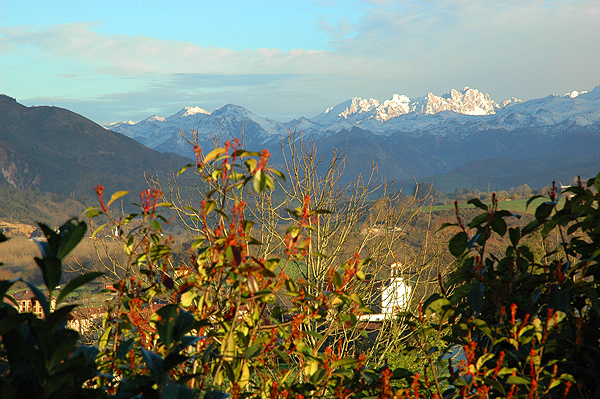
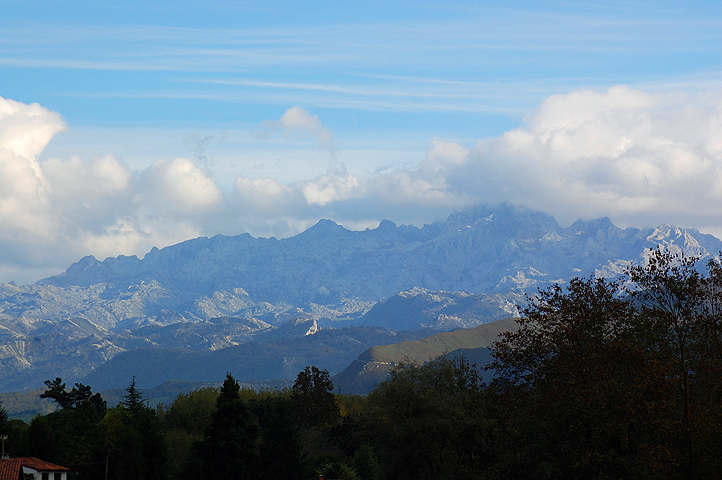
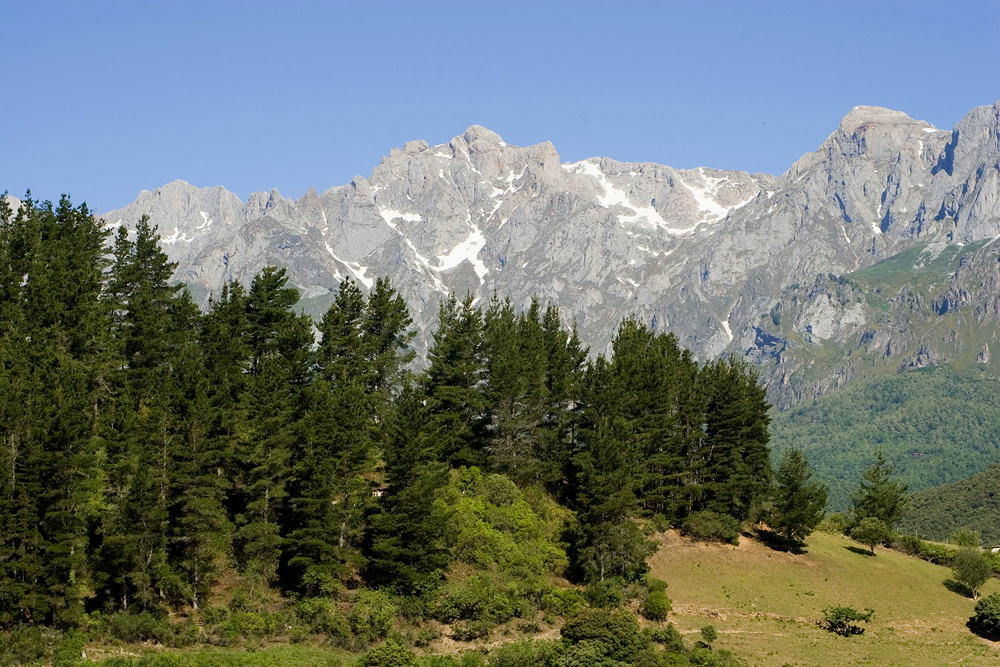
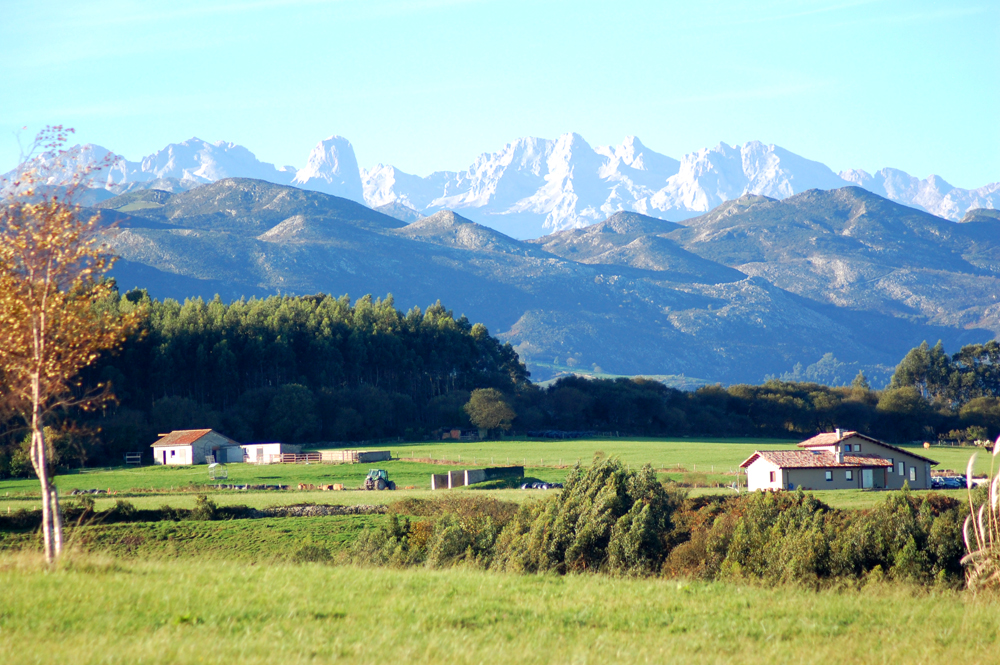
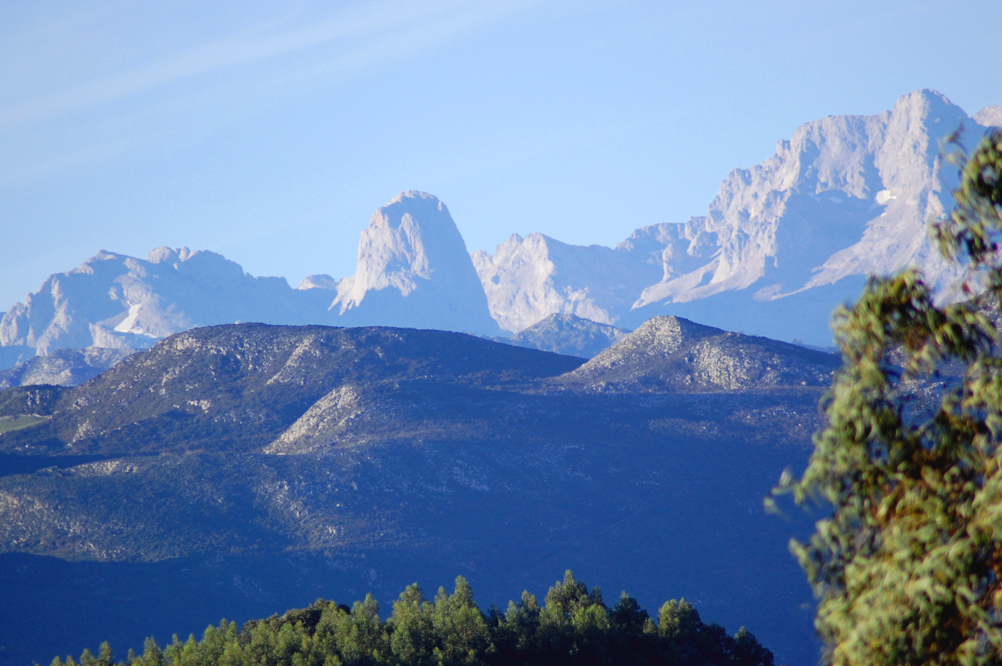
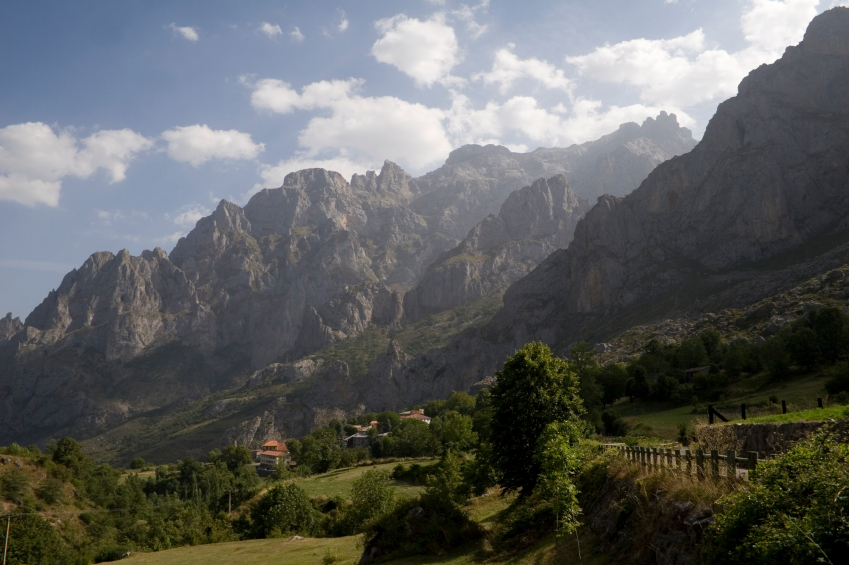
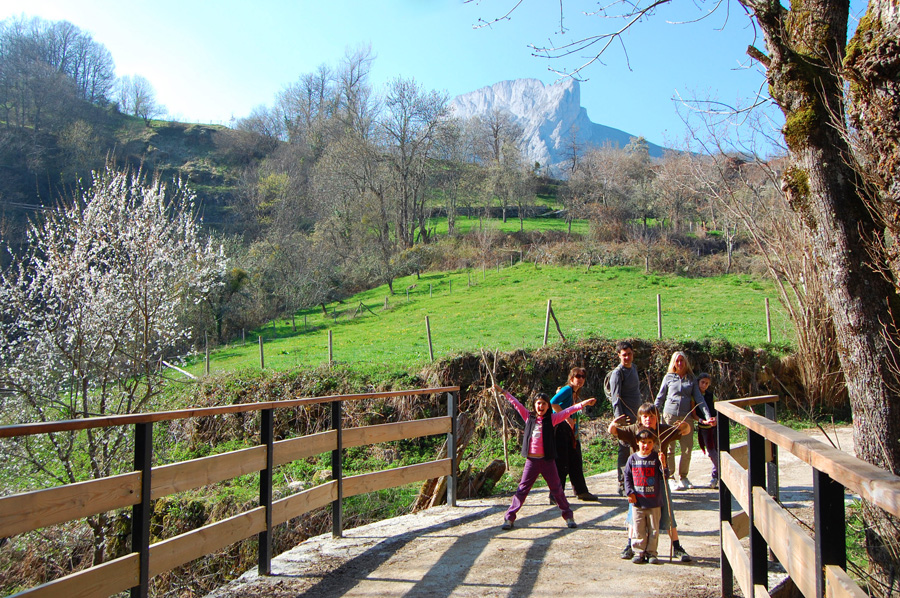
One of the best ways to appreciate the mountains is from a modest distance away. The distinctive wedge-shape of the Naranjo de Bulnes and the surrounding limestone peaks are a fabulous sight across the gentle, green and forested slopes of Piloña: Cider Country and Sierra del Sueve. This area is also your route into the Picos.
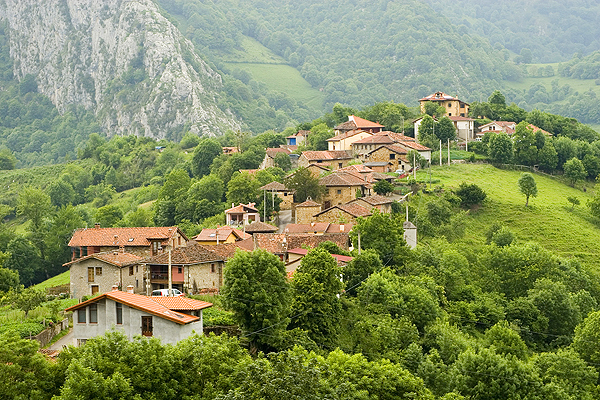
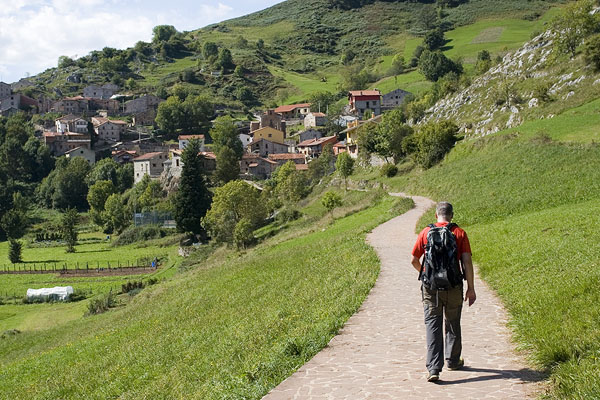
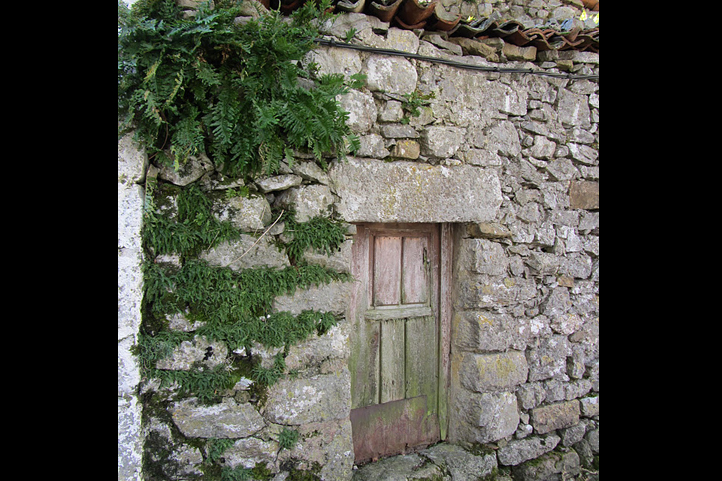
Traversed by the N-634 road that runs from Nava (home to the Cider Museum, of which more anon) in the west to Arriondas in the east, Piloña is a beautifully unspoilt area comprising 24 parishes. It's more like a shire, enchanting to walk and explore. Country lanes follow trout-filled rivers though gorges and wind through wonderfully preserved villages of old stone cottages, valleys with views of the Picos de Europa, traditional homesteads and religious architecture, country homes, woods of beech, chestnut and oak sprouting mushrooms. The hills have abundant populations of deer and wild boar.
ARRIONDAS
Arriondas is best known as the setting-out point for descending the Sella river in kayak, canoe or raft. This small town where the River Sella is swelled by the Piloña river has become a big draw for the number of small operators offering downriver canoe and kayak trips. This has become a popular activity and you'll have no problem hiring a boat if you want to try it. In August, people come from far and wide to take part in the festive International Canoe Race, accompanied by music and street events. You can also organize canyoning and similar outdoor pursuits here, as well as hire mountain bikes. Arriondas has good facilities, including cider houses. There are several bars for evenings out and even a disco. There's also a hospital.
CANGAS DE ONIS
The gateway and hub for the Picos de Europa and the liveliest place in the area. Outdoor activity agencies abound here, offering canoeing, rafting, a rope-and-obstacle park, canyoning, caving and other adventure sports for all ages. Cangas Sunday market is a good opportunity to pick up fresh produce and select from a variety of intriguing (and often pungent) cheeses.
COVADONGA
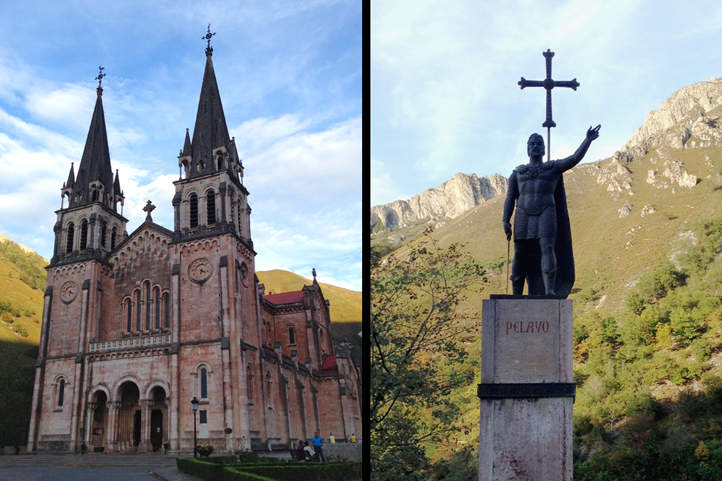
From Cangas, you enter the Picos proper and a 20-minute drive up brings you to Covadonga, where a cave holds the tomb of King Pelayo, famed for his victory over the Moors in 722 AD that marked the beginning of the reconquest of Spain by the Christians. There's a sanctuary in the cave, dedicated to the Virgin Mary, who is understood to have sponsored the victory. Directly beneath the cave, fed by a waterfall, is a small, beautiful lake.
GLACIAR LAKES
Reaching the cave at Covadonga is by no means the end point of the trip. From here, a high road climbs up to the uncanny atmosphere of the glacial lakes, Enol (1,070 m) and Ercina (1,108 m). The destination is so popular during the summer that cars are restricted and a bus takes visitors up from parking zones along the route. You can also take a bus directly from Cangas de Onis.
CABRALES
Here we are at the heart of Picos de Europa for its best-known walking trail. To get there, take the AS-114 from Cangas de Oni mentioned earlier and drive east, or the same road from Panes and drive west. Either way will take you to the area's focal point, Arenas de Cabrales. The name Cabrales means "cheese" to most Spanish people, but on this occasion we're interested in the locality.
From Arenas de Cabrales, it's 15 minutes by road up to Puente de Poncebos where day-trippers have a choice of the terrific Cares Defile walk or the funicular railway to Bulnes.
CARES DEFILE WALK
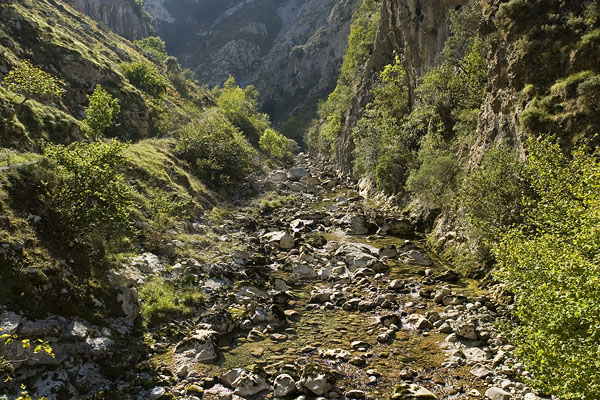
The most famous of the Picos walks for good reason, "the one everyone does," the route from Poncebos to Cain passes through the narrow Cares gorge, along tunnels carved into the rock, by the water, over bridges. You won't get lost: the path is well worn and there are always other people doing the same thing. There are some abrupt drops, but it is not hazardous as long as you wear sensible footwear and ensure you don't get dehydrated. The round-trip to Cain takes approximately 6 hours.
FUNICULAR TO BULNES
Poncebos, the starting point for the Cares Defile walk, lies at the foot of the most emblematic mountain in Picos de Europa, Picu Urriellu, known colloquially as the Naranjo de Bulnes. At the base of the mountain, but high above Poncebos, is the tiny village of Bulnes (population: 22). Bulnes is one of the few villages in Spain without road access. It's a very pleasant 3-hour hike, but most people opt for the 7-minute trip to Bulnes on the funicular railway which passes through a tunnel bored into the rock.
From Bulnes, the views are superb. Only trained mountaineers attempt to climb Picu Urriellu. The west face, a sheer 550 metres, is considered one of the most difficult ascents in Spain.
THE DINOSAUR COAST: FISHING VILLAGES AND BEACHES
Some of the best beaches in Northern Spain are strung out along what is popularly known as the Dinosaur Coast, owing to the impressive fossil record found here, including fossilized dinosaur footprints. There are also attractive towns with harbours and seaside villages.
LLANES
One of the favourite coastal destinations in Asturias, Llanes combines historic charm with being a working fishing port. It has more life and tourist facilities than most of the others. There are pretty beaches and behind it rise the mountains.
TAZONES
Tiny Tazones is high on the list if you fancy seeing a traditional Asturian fishing village. It's quaint, but tends to be overrun with tour buses at weekends.
LASTRES
This photogenic seaside town has pretty streets that afford views down the coast. It's very pleasant to simply walk around. It has good restaurants, its own beach and is also close to Playa Griega beach and the Jurassic Museum, a distinct favourite with children.
JURASSIC MUSEUM
Museo Jurásico is very close to Colunga and Lastres and it is signposted when you drive from the Colunga to Playa la Griega beach (see below). A visit to the Jurassic Museum with its mock-up dinosaurs and real fossils can be made even more real and exciting by going down to Playa La Griega and seeing real dinosaur footprints.
LA GRIEGA BEACH
From Colunga, head towards Lastres and you'll soon come to La Griega beach, which is located just before Lastres itself and below the Jurassic Museum.
There is something intimate and charming about this beach (note that occupation in peak season can be quite high) and it is has a very special attraction: walk inland from the beach about 100 metres (along the parking area), turn left to cross the river, and then take a well signposted path (on the right-hand side of the beach as you face the sea). In less than 10 minutes the path will bring you to a small rocky area with large dinosaur footprints.
CUEVAS DEL MAR & SAN ANTONIO BEACHES
Cuevas del Mar is accessed from the village of Nueva, approximately halfway between Ribadesella and Llanes. You can of course stay right here, but an even better option is to then continue to San Antonio beach, which is very natural and unspoilt.
It is very unusual to see the dramatic Picos de Europa (with patches of snow on top) from the beach, but at San Antonio beach it's possible, and we found it fascinating. If you are here towards the end of the day, or when the tide is in, don't miss the bufones! We'll explain. If you walk up to San Antonio chapel on the cliff top and then go left along the cliffs you will hear the sea roar: those are the bufones, either natural sounds made by sea and air coaming the rock, or sea monsters, as you wish... Sunsets are spectacular here and could be combined with an evening drink at the chiringuitos (beach restaurants).
NIEMBRO SEASIDE VILLAGE FOR TORIMBIA AND NIEMBRO BEACHES
Drive to Posada take the small road to Niembro by Barro village. Both beaches are very pretty and popular. Torimbia is partly nudist and it is accessed by foot down cliff steps: the car has to be left at a car park above the beach. It's an extremely pretty place to be for the sunset. Niembro is a high quality beach, again very pretty, accessed directly from parking. At both beaches parking can be tricky in August if you arrive late.
REGOLGUERU BEACH & EL PINDAL CAVE
Included in our guide to the best beaches in Asturias, Regolgueru is a small cove accessed down a steep cliff path. You can also walk ther from the better known beach of La Franca, but only when the tide is out. Close by Rogolguero, you can see Paleolithic cave paintings in El Pindal cave at Pimiango. Open 10 am – 2 pm & 3.30 pm – 4.30 pm Wed to Sun. Closed Mondays & Tuesdays. Free on Wednesdays ;-).
PONGA
We can't recommend too strongly that you also take another drive: south from Cangas de Onis into the Ponga Natural Park area, for a chance to really get off the beaten track. South from Ribadesella or east from Oviedo, a truly marvellous route into the mountain heart of Asturias starts at Arriondas, bordering the Sierra del Sueve. The N-625 follows the River Sella to the old Asturian capital of Cangas de Onis, where you are already in the Picos and scenery of forest and mountain has taken over. But there's more to come. The salmon river and the road continue south, passing up through a gorgeously verdant valley.
Little villages and the surrounding nature just gets more and more beautiful as you head further south in the direction of Riaño (in León province).
At Precendi, by which time you already feel that you have entered another, more natural, world and time, try a brief detour to little Sames (population :71) in its enchanting setting.
You now come to Ponga and one of the highlights of the Picos de Europa, yet one which is unknown to most visitors.
To your left, hidden behind the steep sides of the gorge, wooded with beech, yew, maple and oak are the high peaks of Picos de Europa. To your right, Ponga Natural Park is a forested mountain wildness where deer and wild boar are prevalent, otters and muskrats indicate the health of running waters, and the elusive brown bear finds a refuge from inquisitive human eyes.
The immense Peloño Forest here is a privilege to set off and walk through. One of Europe's foremost mature beech woods with over 200,000 trees, mountain views and rivulets, it is home to chamois, roe deer and wolf, as well as being one of the most important habitats of the rare capercaillie. A walk through the green shade of these woods is a limpid, luminous experience. In Celtic mythology, the beech symbolizes elegant, practical people, and is related to the mother god and fecundity.
If you want to carry on, you can. The road snakes on, always through impressive mountain scenery, passing eventually all the way into the province of León.
BEARS
No visit to Picos de Europa would be complete without a mention of the beautiful and very rare Cantabrian brown bear. A few pairs still manage to survive out in the wilds here. They are zealously protected and a local NGO, La Fundación Oso de Asturias,looks after their habitat, needs and orphaned cubs. You're very unlikely to see bears, which are sensibly shy of humans, but just knowing they are there makes a difference.
BEST OF THE REST
People of the Picos
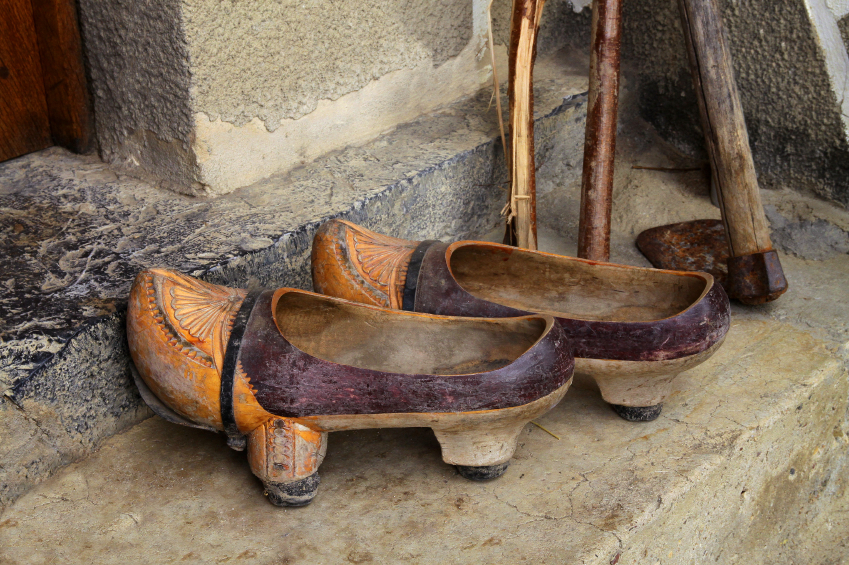
The Picos de Europa mountains are thrillingly beautiful and doubly interesting for being a National Park with habitations: there are several hamlets and villages which coexist in successful harmony with the protected alpine landscapes.
Take the train along the coast
Asturias has a good, reliable and inexpensive light railway system (FEVE), a nice change from the roads that allows your driver to take a day off. The network is administered by the national rail operator RENFE.
Rent a bike in Llanes
Very close to Llanes FEVE railway station is a bicycle hire shop. You can cycle along a track as far as Poo, on the outskirts of Llanes to the west. From Poo, a signposted single-lane path continues along the coast for about 15 km.
Also in Llanes is an activity agency called Torimbia Ocio Natural. As well as bicycle hire, they offer other activities like horseriding, hot-air balloon flights, canyoning and much more. You can check these by visiting their website torimbiaocionatural.es
Fishing
For approximately 13 euros, EU citizens can obtain a tourist fishing permit from the Asturias government via its webpage.
Markets and Fairs
For shopping or simply an interesting insight into the local culture, visit the village markets and fairs. Of special note is Cangas de Onis market held on Sunday mornings.
Other wildlife and birdlife
The Picos de Europa are home to a vast wealth of wildlife, not just bears. There are a few wolves, and plenty of chamois and roe deer, wild boar and foxes. In the woods live partridges, mountain cats, the black woodpecker, the dormouse, squirrels and genets. A few capercaillie still survive in the Asturian Picos.
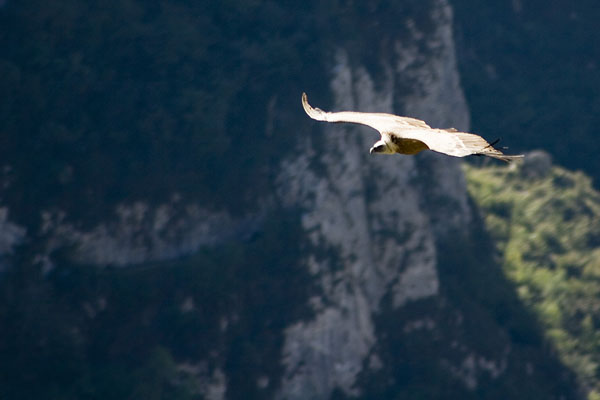
More than a hundred varieties of birds inhabit the mountains and valleys. star attractions are the raptors: Golden Eagle, Short-toed Snake Eagle, Egytian Vulture, Griffin Vulture and Bearded Vulture. You can also spot Red-billed and Alpine Choughs, the Dunnock, and Pipit.
Birders will be delighted to know that spotting trips are a speciality of English-speaking ornithologist Javier Gil.
Nava Cider Museum
The town has 17th century churches and La Cogolla Palace to its name, yet its best-known landmark is the Cider Museum. Open every day except Monday, it's the perfect place to learn all about Asturias' emblematic drink, which you can also read about in a Rustical Travel article Of cider and cheese. You can visit their website to check opening times and fares on museodelasidra.com
Espinaredo
Situated 6 km due south of Infiesto town, this little village represents one of Spain's beauty spots. It nestles at the foot of Piloña's Sierra Bedular, where it is home to 164 inhabitants. Espinaredo's recreational forests with its picnic areas, easy walks, cycle trails and challenging treks make it an exciting destination for a holiday or daytrips. The village breaks the records for traditional Asturian hórreos (grain stores: over thirty of them) and has a clean-running river. When you get to the village, park by the square, opposite the bar, and go for a wander. Afterwards, get back in the car and continue further on the same road along which you came. You will eventually come to La Pesanca picnic area. Park your car here and walk up the track to find a good spot by the river. Keep an eye out for an interesting place for wild swimming, you'll will find one! We found a waterfall with crystal clear water for a swim here.
FOOD AND DRINK
Mountain folk expect you to have a hearty appetite and servings at restaurants are generous indeed. The staple par excellence is fabada is a rich chick pea stew flavoured with pork. Beef steaks are excellent and there is often fish and seafood on the menu.
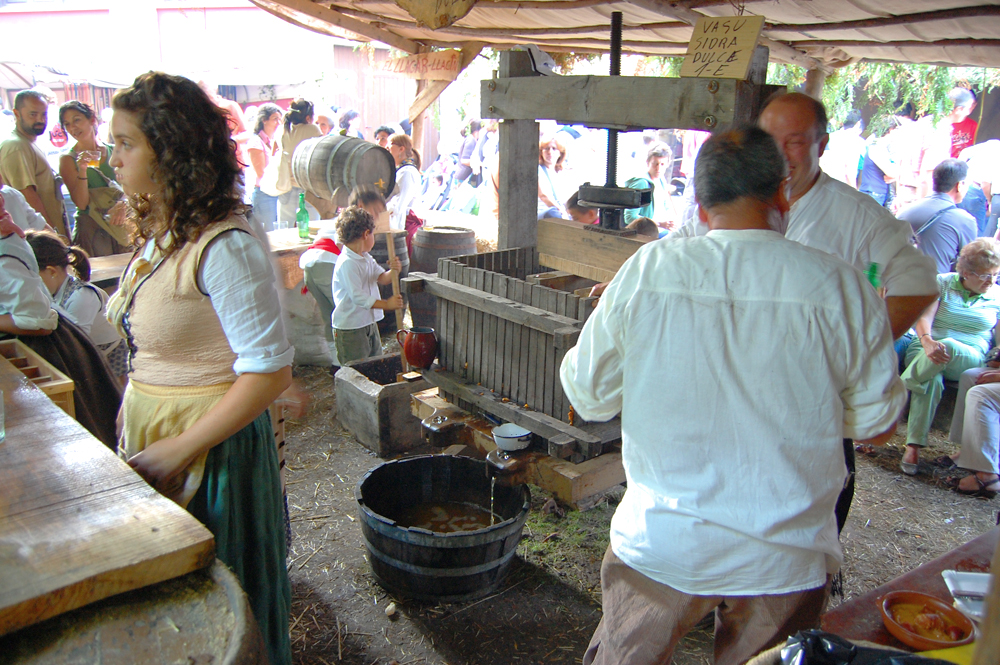
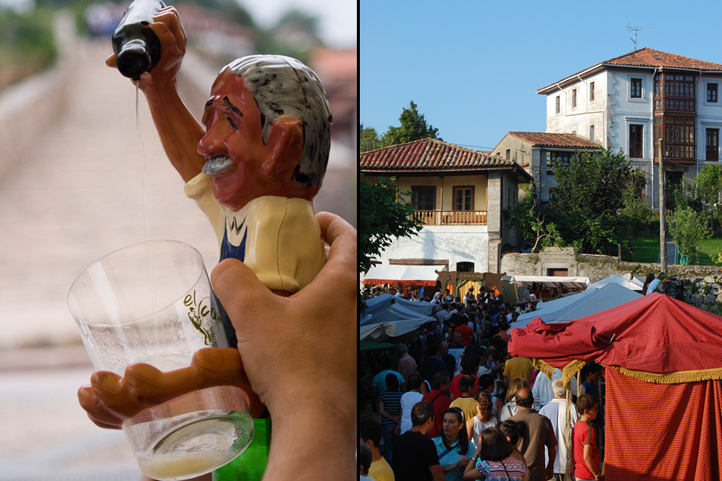
Light, dry Asturian cider is a culture all to itself, requiring a skilled decanting from above head height into the glass to aerate and lend it its full fresh tastiness. Natural cider factories are mostly located in the low-lying Cider Country in and around Villaviciosa, where the apple orchards are to be found, rather than up in the Picos.
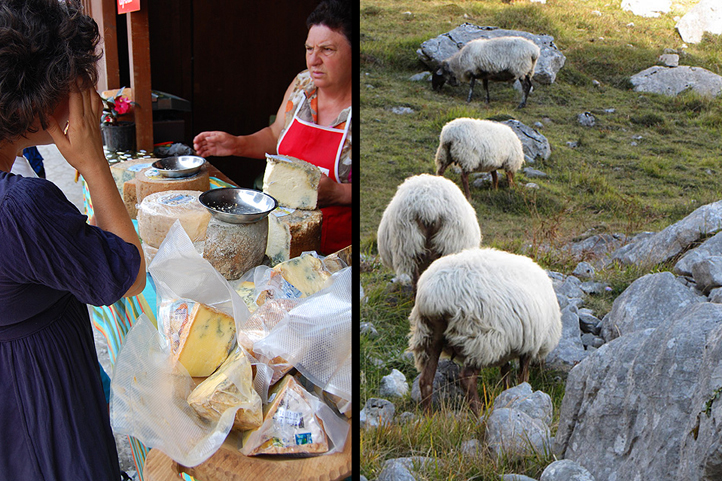
The cider is classically accompanied by Cabrales cheese, spicy and creamy, which can come as a topping on a ración (a portion) of potatoes (patatas al cabrales). Another, much rarer cheese well worth a special mention is Gamonedo. Gamonedo del Puerto comes from the mountain pass (not from the valley). This cheese is highly regarded by the very best Spanish delicatessen shops. It's normally available in small quantities only following sale at auction at very high prices. Rustical Travel has seen this cheese on sale in Madrid at over 60 euros per kilo. It is hand-made by shepherds in their alpine cabins at remote locations high up in the Picos de Europa mountains, not far away from the the snowy peaks. There is no car access to these remote locations and few sheperds to carry on this demanding ancient tradition, hence the price and the scarcity, but you may be lucky and find some in PIcos. Gamonedo is only available end of August, beginning of September, when the shepherds descend to the valley before the autumm starts.The flavour is completely extraordinary: you can simply taste the mountains...
Even small villages in Picos de Europa often have a bar or restaurant where you can order meals, although self-catering is also an ideal option for holidays here. It's very common to find small delicatessen or village supermarket that sells good local produce that you can take home or make into a picnic for days out.